Monkeys Dancing?
Look what I found. What on earth?
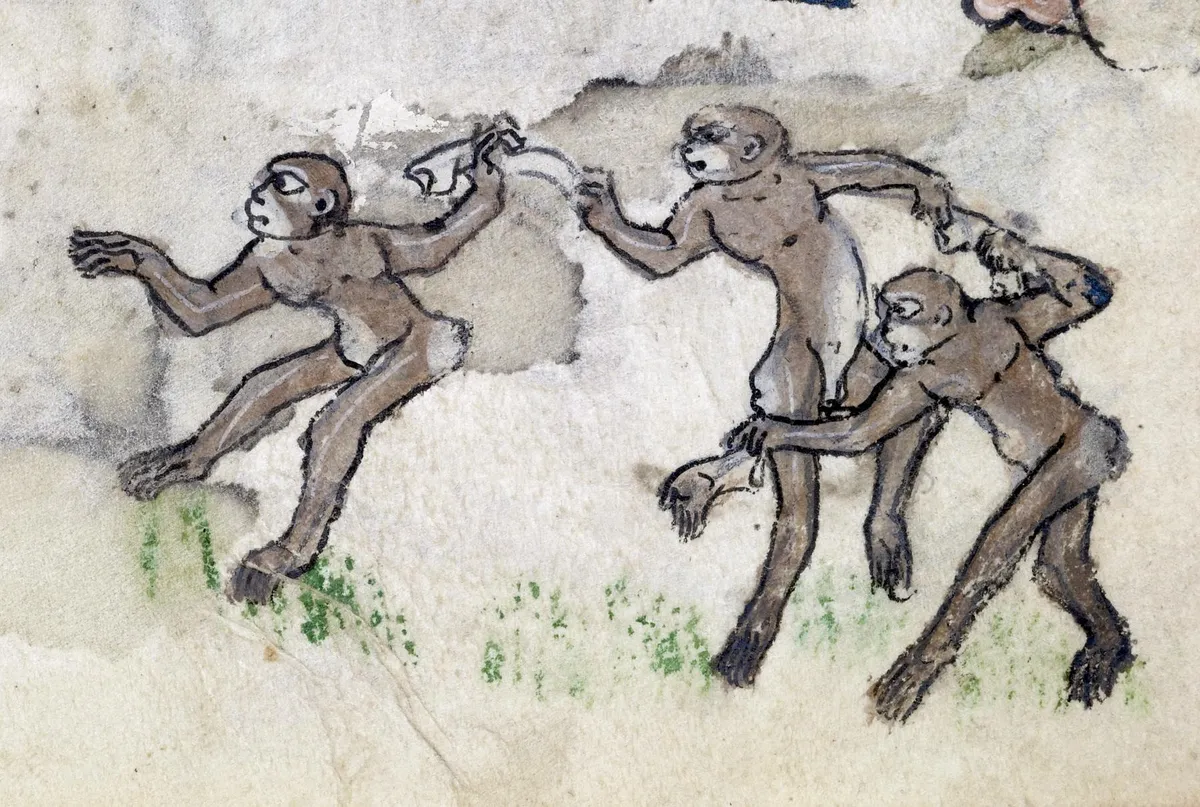
So what are we looking at?
This is a detail from a Flemish Psalter-Hours made in Ghent around 1315–1325. The Walters Art Museum identifies the figures as apes or monkeys dancing in a circle and gives the image the rather extraordinary title “Apes Dancing to Ring-around-a-Rosy.”
But here's where I got stuck.
How do we know they're dancing to Ring-a-Ring o' Roses?
The obvious problem is the date. This manuscript was made around 1315–1325 — before the Black Death reached Europe in the late 1340s. And the familiar plague interpretation of Ring-a-Ring o' Roses isn't supported by the historical evidence for the rhyme. The Library of Congress notes that the plague explanation emerged much later and has not been accepted by folklorists.
So the question isn't really “Were medieval people dancing Ring-a-Ring o' Roses?”
They obviously weren't dancing to the nursery rhyme as we know it.
The question is:
Why has the Walters identified this particular medieval ring dance with that particular modern nursery rhyme?
We don't know why the image was originally made.
We don't know whether the artist intended a particular dance.
We don't know whether it represents a specific medieval game or performance.
And we don't know the basis for the Walters' Ring-around-a-Rosy identification.
And that last one is the question I've asked them.
So I've asked them.
If I hear back, I'll update this post and let you know what they say.
Because now I really want to know. 😂
Until then, I'll leave you with the question: what on earth are these apes doing?