Meet the Citole: The Medieval Instrument That Almost Disappeared
This musician appears in a 700-year-old medieval manuscript.
What exactly are they playing?
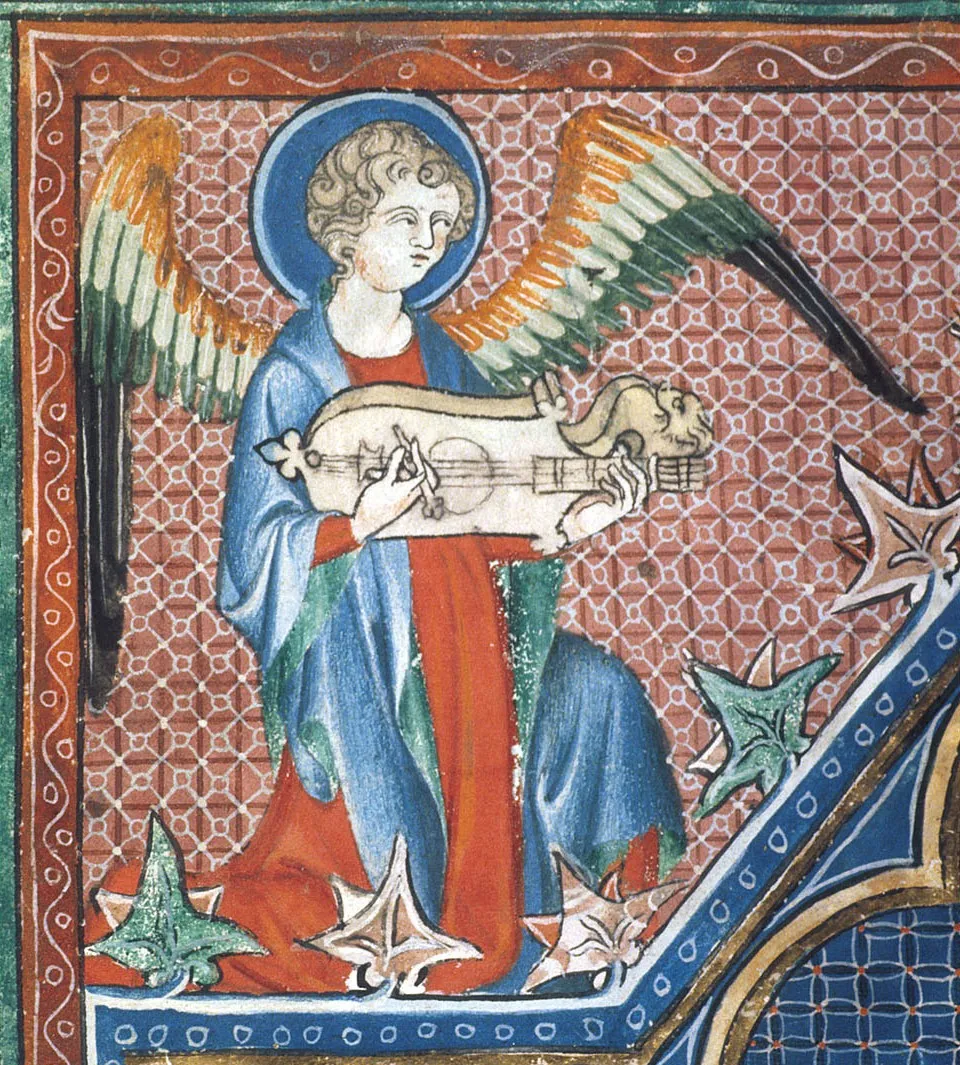
The manuscript above captures more than a medieval musician. It preserves evidence of an instrument that has almost disappeared, yet whose descendants are still being played today.
At first glance, the instrument looks unfamiliar. It has a rounded body, a short neck and is being played with a plectrum. It isn't a guitar, although it may remind you of one.
It's called a citole, one of the most distinctive stringed instruments of the Middle Ages.
What Was a Citole?
The citole was a plucked string instrument that became popular across Europe during the thirteenth and fourteenth centuries. It was played by professional musicians, travelling entertainers and court performers, accompanying songs, dances and storytelling.
Unlike the modern guitar, the citole usually had four strings and a characteristically shaped body with curved or waisted sides. It was played using a plectrum rather than the fingers.
What Did It Sound Like?
No medieval recordings survive, of course, but modern reconstructions suggest the citole produced a bright, clear sound that carried well indoors. It was well suited to accompanying singers and adding rhythm to dances.
Today, musicians who specialise in medieval music have recreated citoles using surviving examples and contemporary illustrations, allowing us to hear something remarkably close to the sounds medieval audiences would have recognised.
Is It Related to the Guitar?
Not directly, but it belongs to the same broad family of plucked string instruments. Over the centuries, instruments such as the citole gradually evolved into later forms including the cittern and, eventually, instruments that influenced the modern guitar.
Although separated by hundreds of years, they share the same basic idea: stretched strings, a wooden body and music created by plucking them.
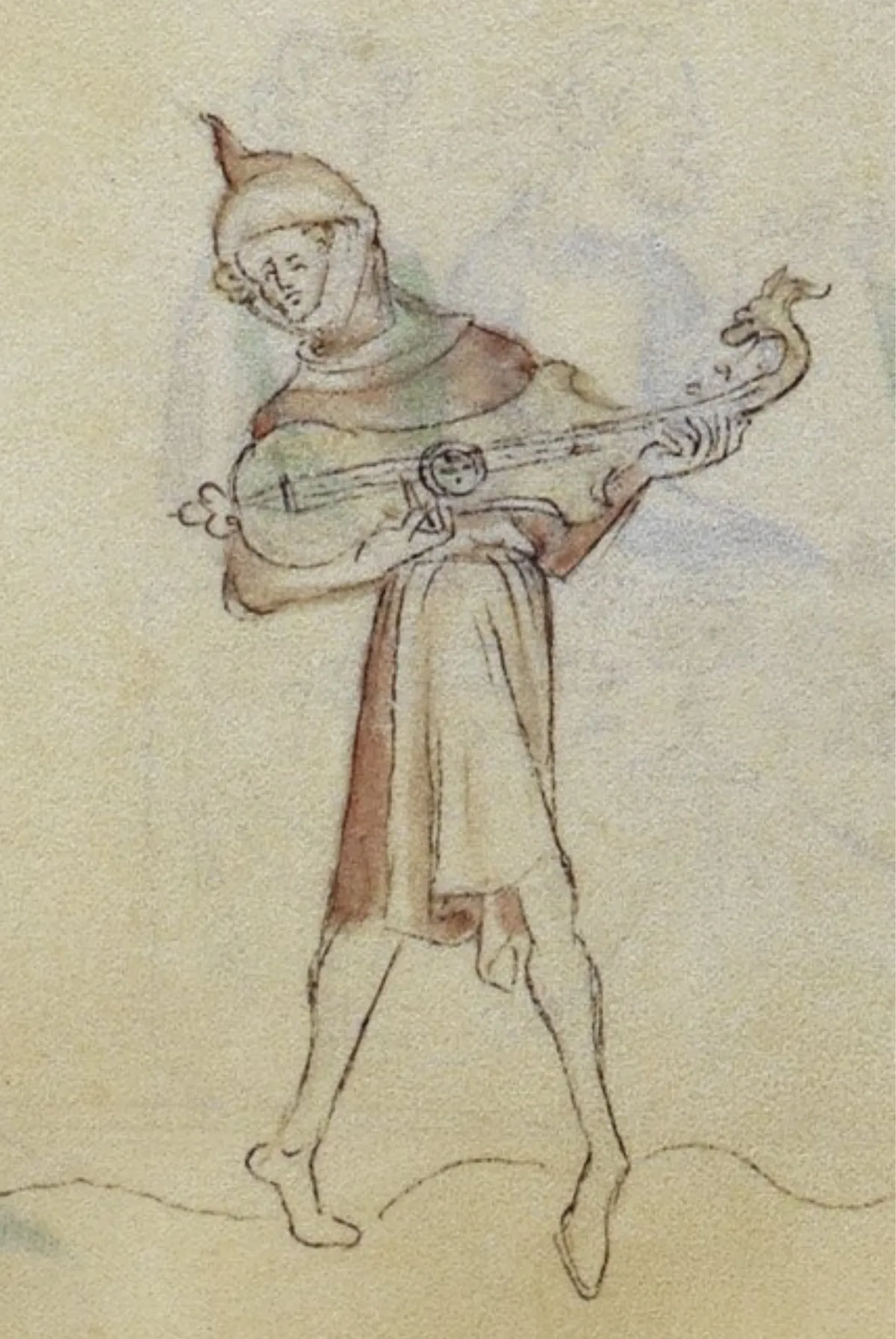
The next time you hear someone strumming a guitar, remember that its musical family stretches back much further than you might think.
Sources & Image
Images:
- Angel playing a citole, De Lisle Psalter, England, c.1310. British Library, Arundel MS 83, f.134v. Public Domain.
- Musician playing a citole, Queen Mary Psalter, England, c.1310–1320. British Library, Royal MS 2 B VII. Public Domain.
Further Reading:
- British Library Digitised Manuscripts.
- Wikimedia Commons (image access and licensing).
- Christopher Page, The Owl and the Nightingale: Musical Life and Ideas in France 1100–1300.