A Baker Is Being Marched Through the Street With Dough Around His Neck
A Baker Is Being Dragged Through the Street. There's a Loaf Tied Round His Neck.
He's not carrying it.
It's tied there. On purpose. For everyone to see.
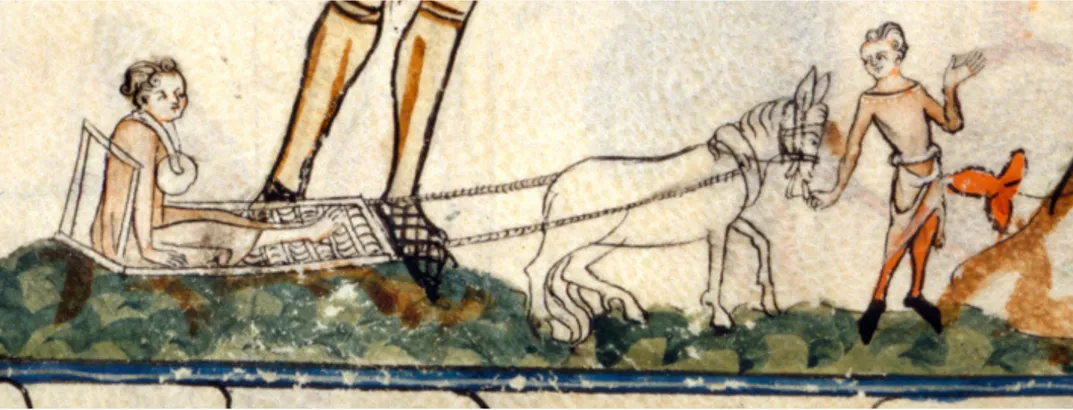
This is a baker, on a hurdle, being dragged through the streets — with the loaf that got him in trouble hanging round his neck the whole way.
That loaf was underweight.
And in medieval England, that was a serious problem.
Bread wasn't just food. It was the food. So there were laws — the Assize of Bread and Ale — fixing exactly how much a loaf should weigh and what it should cost. Bakers who cheated on the weight risked fines.
Or the pillory.
Or, evidently, this. Dragged through town on a hurdle, defective loaf on display, so every single person he'd ever sold bread to knew exactly what he'd done.
It wasn't subtle. It wasn't meant to be.
So bakers found a way round it.
If twelve loaves needed to hit a certain weight, cutting it exactly on the limit was a gamble. One slightly light loaf, and you could end up on a hurdle yourself.
So they started giving thirteen loaves for the price of twelve.
Not kindness. Insurance.
That thirteenth loaf even had a name — the vantage loaf.
And that's where the phrase comes from.
A baker's dozen. Thirteen, not twelve.
Not because anyone was feeling generous.
Because nobody wanted to end up like the man in this picture.
Sources
- Smithfield Decretals, Royal MS 10 E IV, fol. 94, c. 1340. British Library.
- Assize of Bread and Ale, 1266.